Today’s weekly long run took me through the hilly trails just outside Gothenburg. The spring is in full swing here, and it’s finally warm—around 20 degrees Celsius. While I’m still getting used to running in this heat, it’s a refreshing challenge. It forces me to focus more on hydration, adding a new layer of complexity to my training.

During today’s run, which my Garmin set for 1 hour and 17 minutes of low heart rate work (~zone 2), I managed about 8 km. There’s something about the weekend long runs that really clicks for me, except for today when halfway through, my left hip flexor started acting up again. This isn’t new, but it’s a stark reminder of the hurdles ahead as I prepare for the 45 km trail run in September.
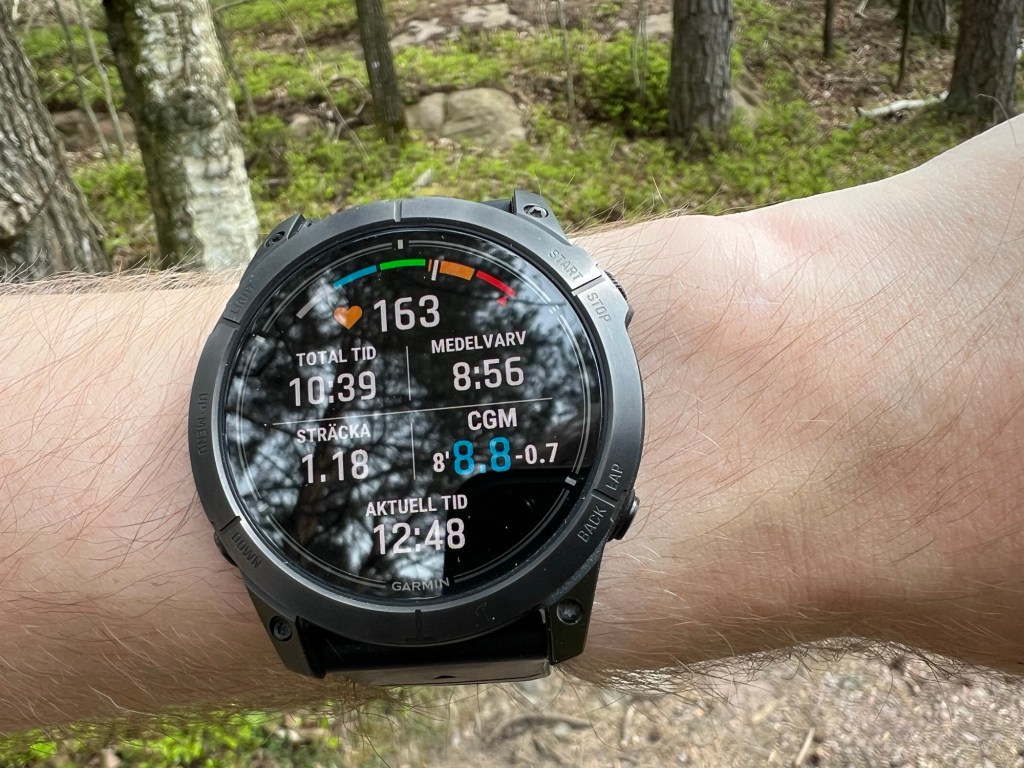
Ironically, managing my type 1 diabetes feels like the lesser of my concerns. My routine—waiting to have minimal active insulin on board, setting my Tandem pump to exercise mode, and keeping plenty of sugar handy—has been working out pretty well. Before heading out, I usually eat a banana to stabilize my blood glucose levels, which I keep an eye on through my Garmin. Continuous carb intake and regular monitoring help me avoid any severe fluctuations.
The real challenges I see looming are injuries and stress. Injuries are part and parcel of a runner’s life, and I’m no stranger to them. My plan to avoid them includes a rigorous regimen of strength training and stretching, focusing particularly on those areas that runners tend to injure. That’s the reason I joined the ATG online coaching a few weeks back, diving into their “Knee Ability Zero” program, which is tailored for these very issues.
Then there’s the stress—balancing daily runs, strength training, and an intense job is taxing. My Garmin keeps a watchful eye on my training load, nudging me towards lighter sessions or rest days when my heart rate variability (HRV) starts showing signs of strain, which has been more frequent over the past couple of months. I’m considering cutting back on running on the days I do strength training to see if that helps balance things out. Another strategy I’m thinking of deploying is meditation, hoping that a calmer mind might translate to a more resilient body.
So, stress and injuries are the main hurdles I need to overcome. If I can manage those, I should be on track. But as with all plans, I’m keeping an open mind—new challenges might pop up as training intensifies.
I’d love to hear about the obstacles you’ve faced in training, whether for a race or just in your everyday fitness routines. Drop a comment below and let’s share some insights!
 Diabetes Simon